It's the end of October, and most retailers, wholesalers and manufacturers are already gearing up for the final quarter. Black Friday, Christmas, year-end corporate orders: this is when the biggest shipments arrive, and when it turns out that your own warehouse, which looked spacious in spring, is simply too small.
At this point most companies choose between two bad options: they either cram everything into their existing premises, or sign a long-term lease on a new warehouse that stands half empty after the season. There is a third way: temporary, flexibly expandable external warehouse capacity.
6 signs you've outgrown your premises
1. Pallets are standing in the aisles and the loading area
The first and most visible sign. If the goods no longer fit in their designated place, and pallets are standing in walkways, in the loading area or in the office, the warehouse has reached its capacity.
2. Your warehouse staff spend more time moving stock around than serving orders
If you have to move three pallets before you can pick an order, service slows down. In a crowded warehouse, working time, the number of errors and the share of damaged goods all go up. This cost rarely shows up as a single line in the accounts, but it's there every day.
3. Safety and fire risks are building up
Blocked escape routes, overloaded shelves and pallets stacked too high are not just against the rules, they're dangerous. A health and safety or fire inspection can mean a serious fine and an enforced shutdown.
4. You turn down a good purchase for lack of space
If your supplier would give you a significant discount on a large order, or you could sell a good sale item during the season but have nowhere to put it, the lack of space comes straight out of your profit.
5. You're considering a new site because of a peak that lasts a few months
If you're thinking about larger premises because your current ones are too small for two or three months a year, it's worth pausing. The cost of a long-term lease, the move, the fit-out and the running costs weigh on you all year round, while you only need the extra capacity during the season.
6. Your warehouse is half empty for most of the year
This is the reverse of the previous point: if you sized your warehouse for the peak, you're now paying for empty square metres nine months of the year. Your warehouse should follow your seasonality too.
What are your options?
A new, larger site. This makes sense if the growth is lasting and you need the extra capacity all year round. The downsides are the long contract, the move and the high fixed costs.
A container in the yard. Quick, but risky: containers have large temperature swings, condensation forms easily, and security and insurance are harder to arrange. That's exactly why ZedStore doesn't store in containers.
Temporary external warehouse space. Space rented for the season, which can be expanded and reduced flexibly, in a guarded warehouse with lorry access. It's ideal if the extra need is periodic and the quantity can be roughly estimated in advance.
We've written more about choosing between your own warehouse and self-storage in our article Own warehouse or self-storage: which pays off for your business?
What's worth moving to the external warehouse?
You don't need to move all your stock out, just what you don't need for day-to-day order fulfilment. A simple set of criteria:
- Slow-moving stock: products of which only a few sell each week, but of which you hold large quantities.
- Seasonal reserve: extra stock bought in for the peak, from which you top up your own warehouse every week.
- Bulk purchases: discounted, large-volume purchases that you work through gradually.
- Marketing and POS materials: displays, stands and campaign materials that are only needed from time to time.
- Shop fittings and spare furniture: shelving, counters and display cabinets standing idle between two projects.
Fast-moving products with daily turnover should stay at your own premises, and the external warehouse should work as a replenishment store. For this, releases need to be quick, and the warehouse needs to be able to deliver.
What should a good temporary warehouse offer?
- Lorry access and a forklift: so you can send large shipments directly to the external warehouse.
- Flexible expansion and reduction: so you can increase the area at the start of the season and reduce it at the end, without penalties.
- Daily, weekly and monthly billing: so you don't have to pay for a whole year for a seasonal need.
- Fast release and delivery: so you can top up your own warehouse regularly.
- Documented stock: an itemised inventory on intake and a handover record on release.
- Security: 24/7 security, CCTV, an alarm, property insurance, and a dry, rodent-free environment.
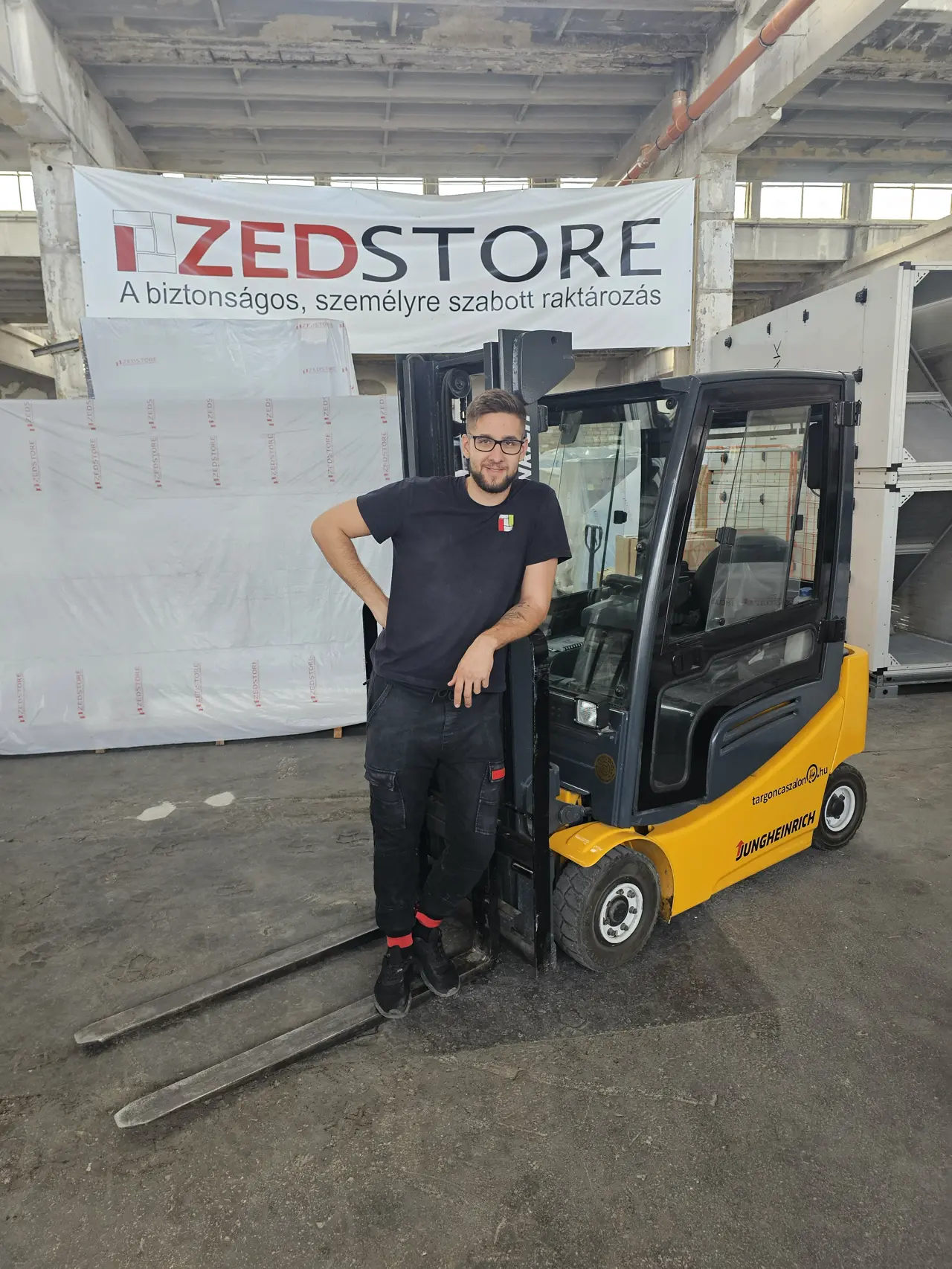
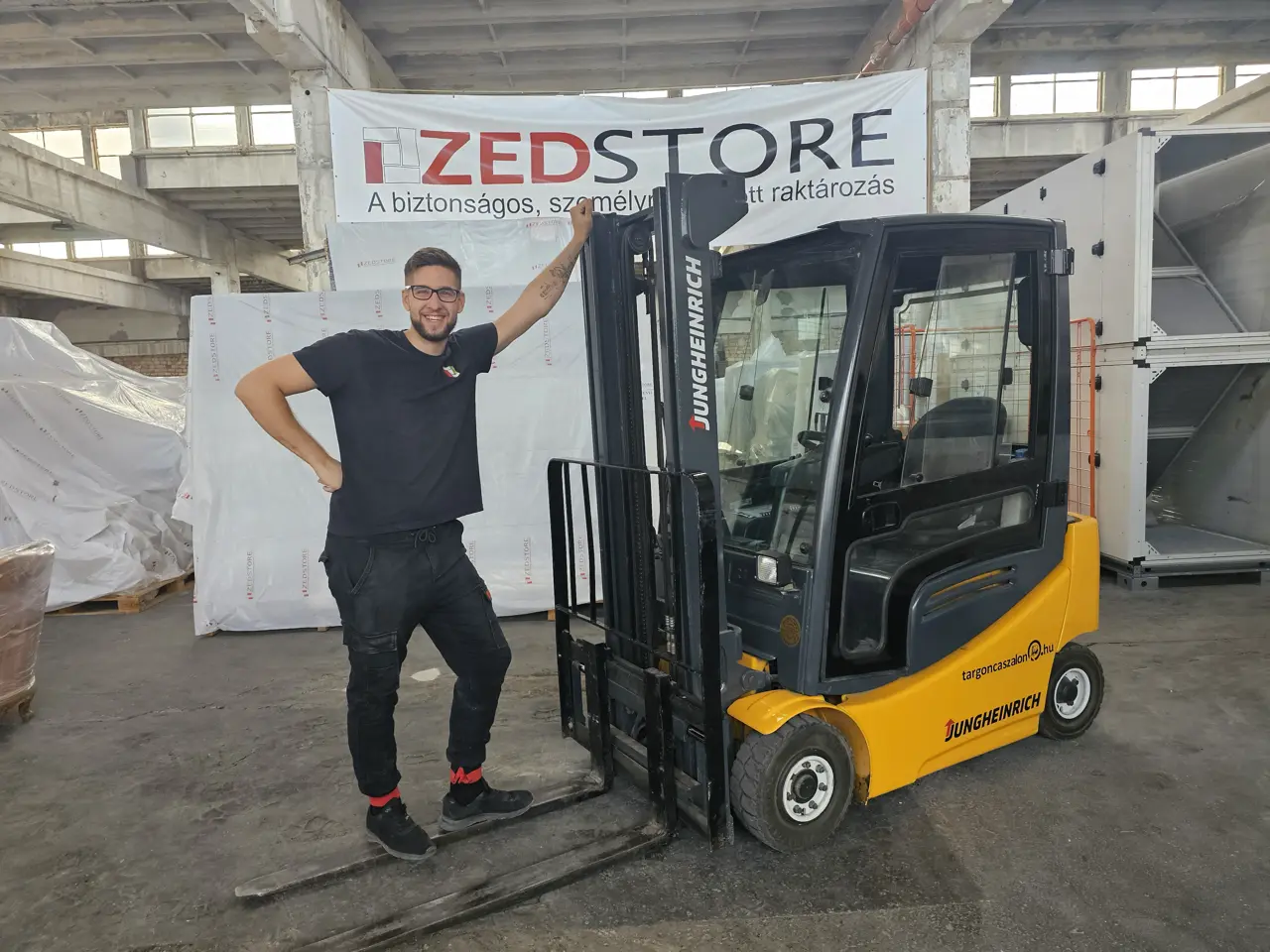
ZedStore provides all of this in one place in Kőbánya, on Porcelán utca. We're not a classic self-service mini storage facility, nor a rigid logistics centre sized for high volumes. We offer flexible space with goods handling, a forklift and truck delivery. You can read more about pallet storage in our article Pallet storage: how does it work?
Timeline: when should you act?
If your peak season starts in November, it's worth arranging external warehouse capacity in October:
- 4 weeks before the peak: estimate the extra stock in pallets or square metres, and request a quote.
- 3 weeks before: decide which product groups go to the external warehouse, and agree with your supplier that part of the shipment will be delivered straight there.
- 2 weeks before: intake, inventory, and agreeing the release routine (how often, and how much notice you give).
- During the season: weekly or on-demand replenishment of your own premises.
- After the season: returning the remaining stock or reducing the area.
Already a customer?
If you already store with us and need more space for the season, your existing area can easily be expanded: just tell us by how much and from when. To mark our 18th birthday, new customers get 18% off the first month's fee if they sign a contract by 12 January 2027. You'll find the details on the zedstore.hu/en/18 page.