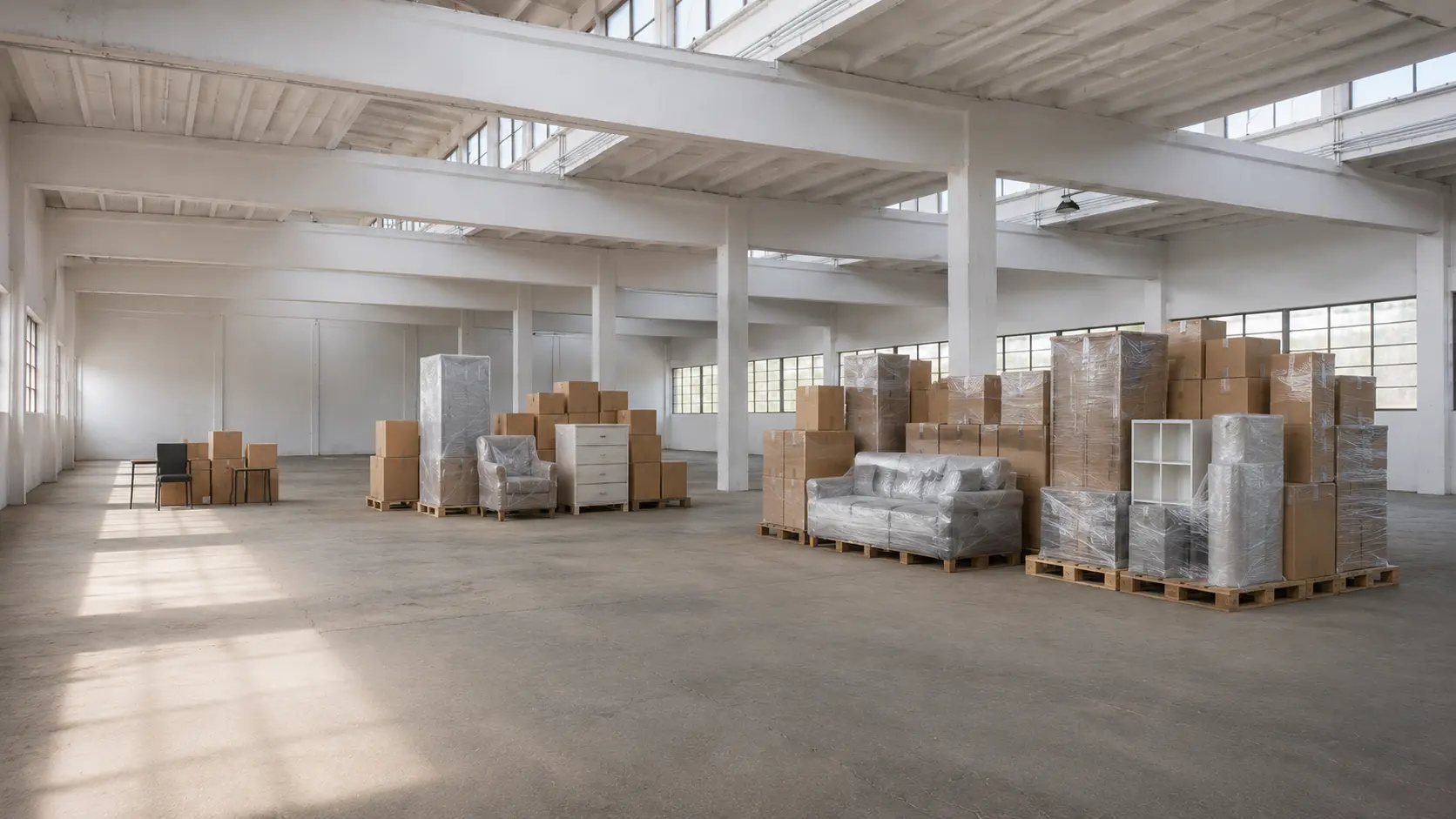
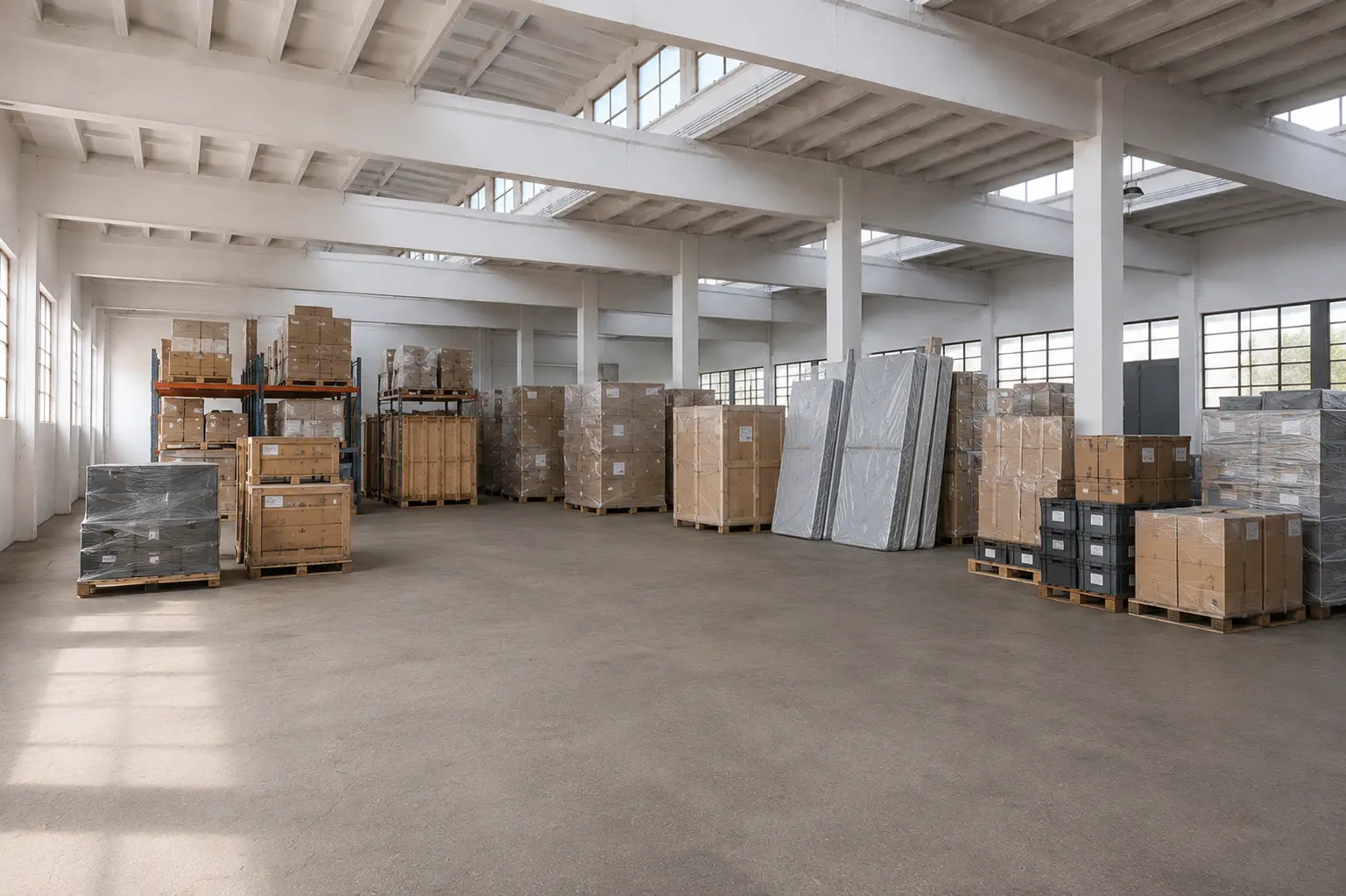
A job contract abroad, a scholarship or a move for love is always exciting, but it also raises plenty of practical questions. One of the most common: what happens to the flat and everything in it? If you let the flat, you need to leave it empty or partly furnished. If you sell it, everything movable has to go. And if you're only going for a year or two, you may not want to give up everything you've collected over the years.
In this guide we go through how to decide what to keep and what's worth putting into storage, and how to manage your storage even once you've left the country.
Why does it matter what happens to your belongings while you're away?
Many people first reach for the most obvious solution: their parents' attic, a relative's garage or a friend's cellar. That can work in the short term, but over a year or two several problems can crop up. Cellars and garages are rarely dry and damp-free all year round, and wooden and upholstered furniture, books and clothes quickly suffer from moisture. If your relatives need the space in the meantime, your things will be in the way, and they, not you, will end up organising the move, at a time when you're not even in the country.
In a warehouse designed for storage, by contrast, your belongings are kept in predictable conditions, and you know exactly what is where, who can access it and what it costs.
The first decision: keep, sell or store?
Before you put anything into a box, think through what's worth keeping at all. A simple rule can help:
Compare what it would cost to replace an item with what it would cost to store it for as long as you're away.
A cheap flat-pack shelf probably isn't worth bringing back after two years in storage, but a good-quality sofa, a solid-wood dining table or an inherited wardrobe almost certainly is. Sentimental value matters too: family photo albums, childhood keepsakes or a musical instrument can't simply be "bought again".
A practical way to group things:
- Take with you: clothing, documents, laptop and the personal items you need day to day.
- Sell or give away: cheap furniture, outdated electronics and anything you haven't used in the past year.
- Put into storage: quality furniture, larger household appliances, books, keepsakes, sports equipment and seasonal items.
What's worth putting into storage?
In our experience, customers heading abroad typically store these items with us:
- sofas, armchairs, beds and mattresses (with proper protective wrapping);
- wardrobes, chests of drawers, dining tables and chairs;
- fridges, washing machines and dishwashers (thoroughly cleaned and dried);
- books, records, photo albums and documents, boxed;
- bicycles, skis and camping gear;
- decorations, pictures and lamps;
- children's furniture and toys you'll use again later.
If you're unsure how much space all this needs, our article How much storage space do you need for a move? gives a detailed estimate by flat size.
What shouldn't go into storage?
Some things aren't worth leaving in any warehouse long term. You can't store perishable food, live plants, flammable materials (paint, thinner, gas cylinders, fuel) or chemicals. Cash, jewellery and irreplaceable securities are better kept in a bank safe deposit box. Take your original personal documents with you, or leave them with a trusted family member. We've collected the detailed rules in What can you store safely in a warehouse?
How to prepare 4–6 weeks before you leave
A move abroad can't be rushed through in a weekend. If you start in good time, it will be far less stressful.
6 weeks before: Request a storage quote and book a date for moving your things in. Decide whether you want us to handle the transport or bring the items yourself.
4 weeks before: Start sorting and selling. Get your packing materials. With us you can not only buy boxes but also rent them, so you won't be left with unnecessary cardboard.
2 weeks before: Pack the things you rarely use, your books and your seasonal clothes. Write on every box what's inside and which room it came from.
In the final week: Take apart the larger pieces of furniture, put the screws in labelled bags and tape them to the furniture. Clean the household appliances and let them dry out, because mould can quickly appear in a closed, damp fridge or washing machine.
On moving-in day: With our man-and-van service, our 3.5-tonne truck and team collect your belongings. At the warehouse an itemised inventory is made, and your items are wrapped in protective film and labelled with your name.
You can read about the most common packing mistakes in our article Packing before storage: 9 mistakes that are easy to avoid.
How can you manage your storage remotely?
One of the biggest worries for people moving abroad is what happens if they need something in the meantime, or if the storage needs to change. A few things are worth settling in advance:
- An authorised person: Name a family member or friend who can access your belongings on your behalf if needed.
- A digital inventory: Ask for the inventory list and photograph the boxes with their labels. That way you'll know what to ask for, even from abroad.
- Electronic invoicing and bank transfer: Set up regular payments so you don't have to deal with it every month.
- Delivery on request: If something is needed at home, we can deliver the stored item to the address you give us.
When you come home, a phone call or an email is enough: we agree a date, deliver your belongings to the address you give us and put the furniture in place.
How long, and how much does it cost?
At ZedStore you can choose daily, weekly or monthly billing, and you only pay for the space you actually use. This is especially important for people moving abroad, because the volume of their belongings rarely fits a standard unit size. If it turns out during the storage period that you need less space (for example, because you've sold a couple of larger pieces), the area can be reduced too.
The monthly fee depends on the area you rent, and you'll find the tiered prices on the Pricing page. For a longer-term contract, be sure to ask about current discounts.
Why does warehouse quality matter in the long run?
Over a year or two, poor conditions can cause serious damage. It's worth checking whether the warehouse:
- is in a ground-floor brick or similarly solid building (not a container or a basement);
- is dry, damp-free and rodent-free;
- has 24/7 security, CCTV and an alarm;
- has property insurance.
ZedStore meets every one of these: we store in high-ceilinged, ground-floor brick buildings with special fire protection and an alarm system backed up by infrared barriers and a GSM module.