What almost any warehouse can handle
Furniture, boxed clothing, books, documents, seasonal decorations, sports equipment and most household appliances can be stored without any issue in a dry, enclosed space. For these, the main concern isn't storability but the quality of the packing.
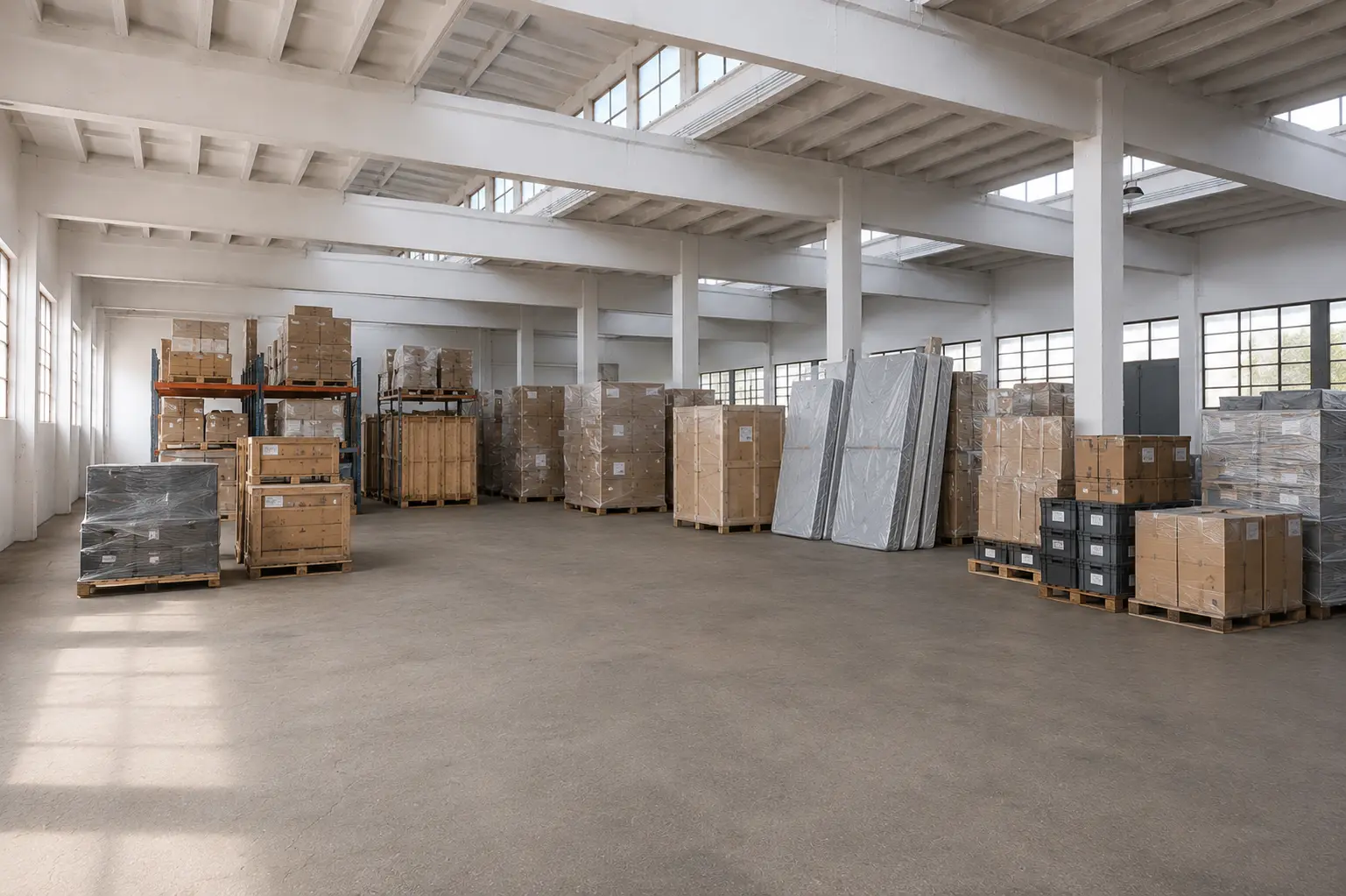
For businesses, the same applies to palletised goods, raw materials, exhibition elements and archived documents — as long as the packaging can handle loading and stacking.
- furniture and home items
- boxed textiles and clothing
- books, documents, archives
- seasonal sports equipment
- palletised goods and raw materials
What needs special attention: temperature and humidity
Large temperature swings and high humidity are the two most common reasons something comes out of storage in worse condition than it went in. This is especially true for wood, leather, electronics and chemicals.
In an unheated, unventilated space, wood panels can warp, leather can crack, and printed circuit boards can corrode. The solution isn't a more expensive warehouse, but proper packing and placement that allows air to circulate.
- wood items: should not touch the floor or wall directly
- electronics: in original or anti-static packaging
- leather and textiles: under a breathable, non-airtight cover
- paintings, instruments: preferably not at floor level
What's prohibited or not worth bringing into a warehouse
Flammable, explosive or heavily polluting materials — such as bottled gas, fuel, chemical waste, as well as perishable food — are prohibited in most warehouses, and this isn't a formality, but a fire- and accident-safety matter.
Living creatures, as well as items whose origin or contents are unclear, also cannot be stored. If you're unsure how a particular item is classified, always ask the warehouse operator before packing.
- flammable and explosive materials
- perishable food
- hazardous waste, chemicals
- living creatures
Organisation is a safety issue too
A well-stored warehouse isn't just easier to navigate — it's also safer: stably packed pallets, secured shelving and a clear access aisle reduce the risk of injury and damage.
As a rule of thumb, heavier items should go at the bottom, and frequently moved boxes should be placed somewhere easily reachable — not in the deepest corner.