List what you'd store — by type and quantity
Make an inventory of the equipment you use regularly: how many tent frames, how many counters and stands, how much sound and lighting equipment, and how much small furniture and decor goes with it.
It's also worth counting separately the items needed only for one larger event — these often take up space for just a few weeks, yet can significantly increase your peak-season space needs.
- number of tent frames and marquee elements
- size of stands, counters, banners
- amount of sound and lighting equipment, cabling
- small furniture, chairs, decor
Stackability matters a lot for the final space needed
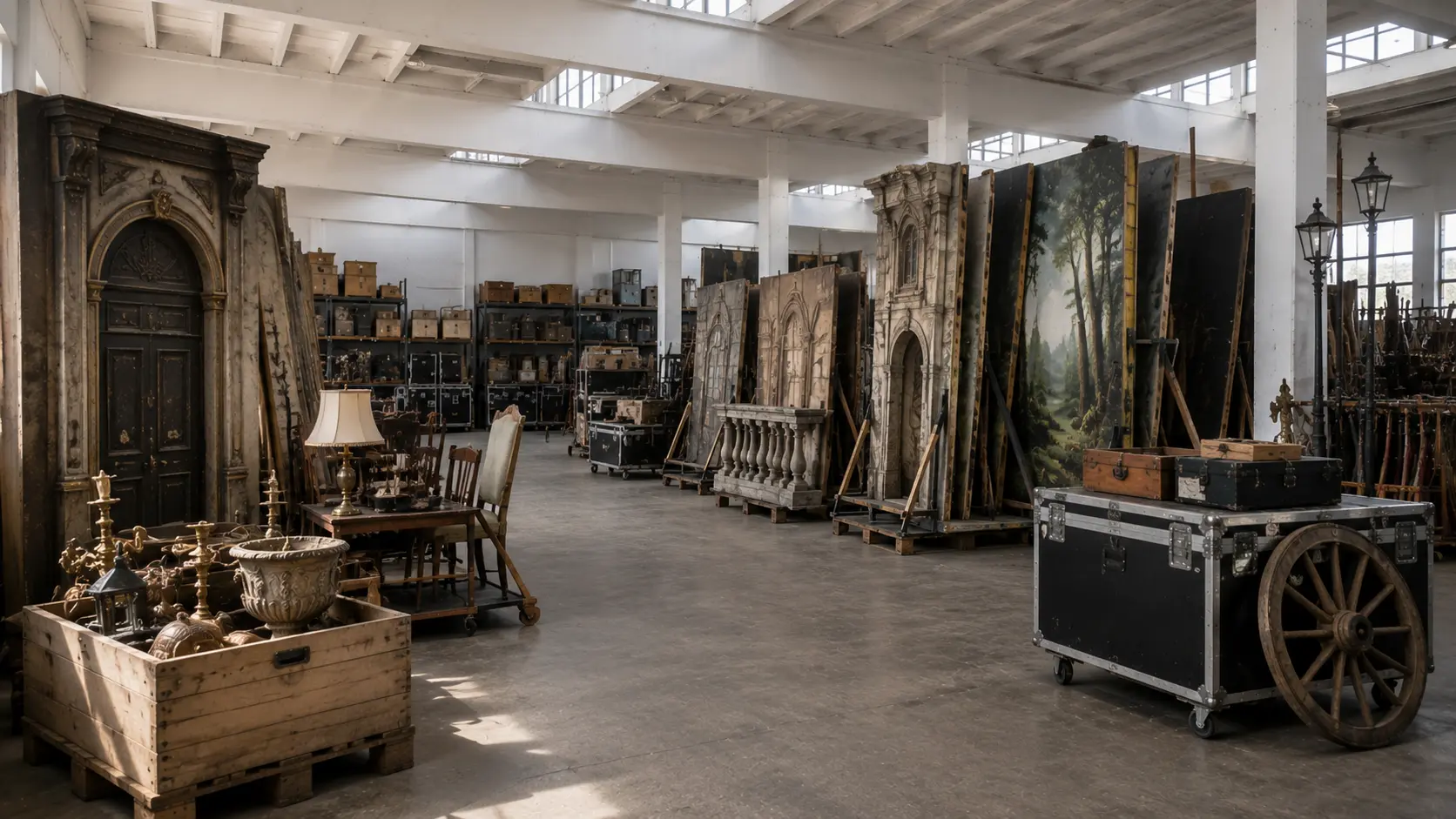
Uniformly sized crates and boxes that fit on a pallet make much better use of space than uniquely shaped, non-disassemblable elements. If possible, break tent frames and stand elements down to a transportable size.
Fragile technical equipment and painted decor, on the other hand, can't be stacked tightly — factor in extra space for these for protection.
Take seasonal peaks into account
For most event companies, the most equipment is in circulation during the summer months, while from autumn to spring most of it waits in storage. If you base your estimate only on a single moment in time, you'll easily underestimate the space needed at the season's peak.
It's worth using the largest simultaneous quantity as your baseline, and working backwards from there to figure out how much space you need continuously versus only temporarily, before and after a larger event.
Request an assessment before you sign
If you're unsure of the exact quantity, list the larger items with photos and dimensions, and request a quote based on that. This avoids paying for an under- or oversized warehouse.
At ZedStore we work with daily, weekly and monthly billing, so even extra peak-season space doesn't mean an annual commitment.