Autumn is one of the peak seasons for renovations. After the summer holidays, many people take on painting, new flooring or a full flat renovation at this time of year so that their home is in order for the heating season. One of the first questions is always the same: what should happen to the furniture?
In this article we look at when keeping things in place is enough, when it's worth putting the furniture into storage, and how to organise it so that everything goes back in its place undamaged and clean at the end of the renovation.
When is covering enough, and when does it need to go?
The decision depends on the scale of the renovation. A simple guide:
Keeping things in place may be enough if:
- only one or two rooms are being painted, and there's somewhere to move the furniture to;
- the work will be done in a few days;
- there's no sanding, demolition or chasing of walls.
Storage is recommended if:
- floors are being replaced (parquet sanding, tiling), where the floor needs to be completely clear;
- walls are being knocked down, chased or plasterboarded, which produces a great deal of fine dust;
- electrical wiring or plumbing is being replaced, and every wall needs to be accessible;
- the whole flat is being renovated at once and there's no "escape room";
- the renovation will last several weeks or months.
Plaster and concrete dust gets into drawers, upholstery and electronics, and it's very hard to remove. Moisture also settles under plastic sheeting, which isn't good for wooden furniture either. In a larger renovation, the trades also have to keep working around the covered furniture, which slows the work down and increases the risk of damage.
What do you gain by putting the furniture into storage?
- Faster work. In an empty flat the trades can work without obstacles, which often saves days and shows in the labour cost.
- No damage. A falling ladder, a dropped tin of paint or a careless move with an angle grinder can do serious damage to a sofa or a wardrobe.
- Clean furniture. After the renovation you won't spend weeks wiping dust out of drawers and upholstery.
- Peace of mind. You know your belongings are somewhere guarded and dry, not in a half-finished flat where several strangers come and go every day.
How long should you plan for?
Renovations are rarely finished exactly on schedule. It's worth allowing a buffer of at least 20–30%. That's why it matters that the warehouse bills flexibly: at ZedStore you can choose daily, weekly or monthly rates, so if the renovation takes a week longer, we simply store your things for another week, without a new contract.
If you only need the space for a few days (for parquet sanding, for example), we charge a daily rate. For a few weeks' work the weekly rate is better value, and for a renovation of one or more months, the monthly rate.
What should go into storage, and what should stay with you?
You don't need to take everything. You'll still need some things during the renovation, especially if you're living in the flat or in short-term accommodation in the meantime.
Into storage: large furniture (sofa, bed, wardrobes, dining table), books, decorations, pictures, rarely used kitchenware, seasonal clothes and children's toys.
Keep with you: everyday clothes, important documents, your laptop and chargers, medicines, some basic kitchenware and cleaning products.
Tip: number the boxes going into storage and make a simple list of what's in each one. If you do need something during the renovation, you'll know exactly what to ask for.
How should you pack the furniture?
Good packing pays off when you move back in after the renovation. A few ground rules:
- Take apart whatever you can. Bed frames, table legs and shelves take up less space when dismantled and are less likely to be damaged. Put the screws in a labelled bag and tape it to the back of the furniture.
- Empty the drawers. A wardrobe full of drawers can be damaged in transit, and it's heavy too.
- Protect edges and corners. Bubble wrap, cardboard corners or protective film: most transport damage happens at the corners.
- Don't wrap upholstery airtight. Condensation can leave stains. Use a breathable cover or the warehouse's protective film.
- Put fragile items in separate boxes. Glass, porcelain and lampshades: tissue paper, bubble wrap and a clearly visible "fragile" sticker.
You can buy packing materials from us, but you can also rent them, so you won't be left with a pile of empty cardboard at the end of the renovation. You can read about common packing mistakes in our article Packing before storage: 9 mistakes that are easy to avoid.
A timeline before the renovation
2–3 weeks before: Agree the start date with the trades and request a quote for storage and transport. Estimate the volume; our article How much storage space do you need for a move? can help with this too.
1 week before: Pack the things you rarely use, your books and decorations.
1–2 days before: Take the furniture apart and empty the wardrobes.
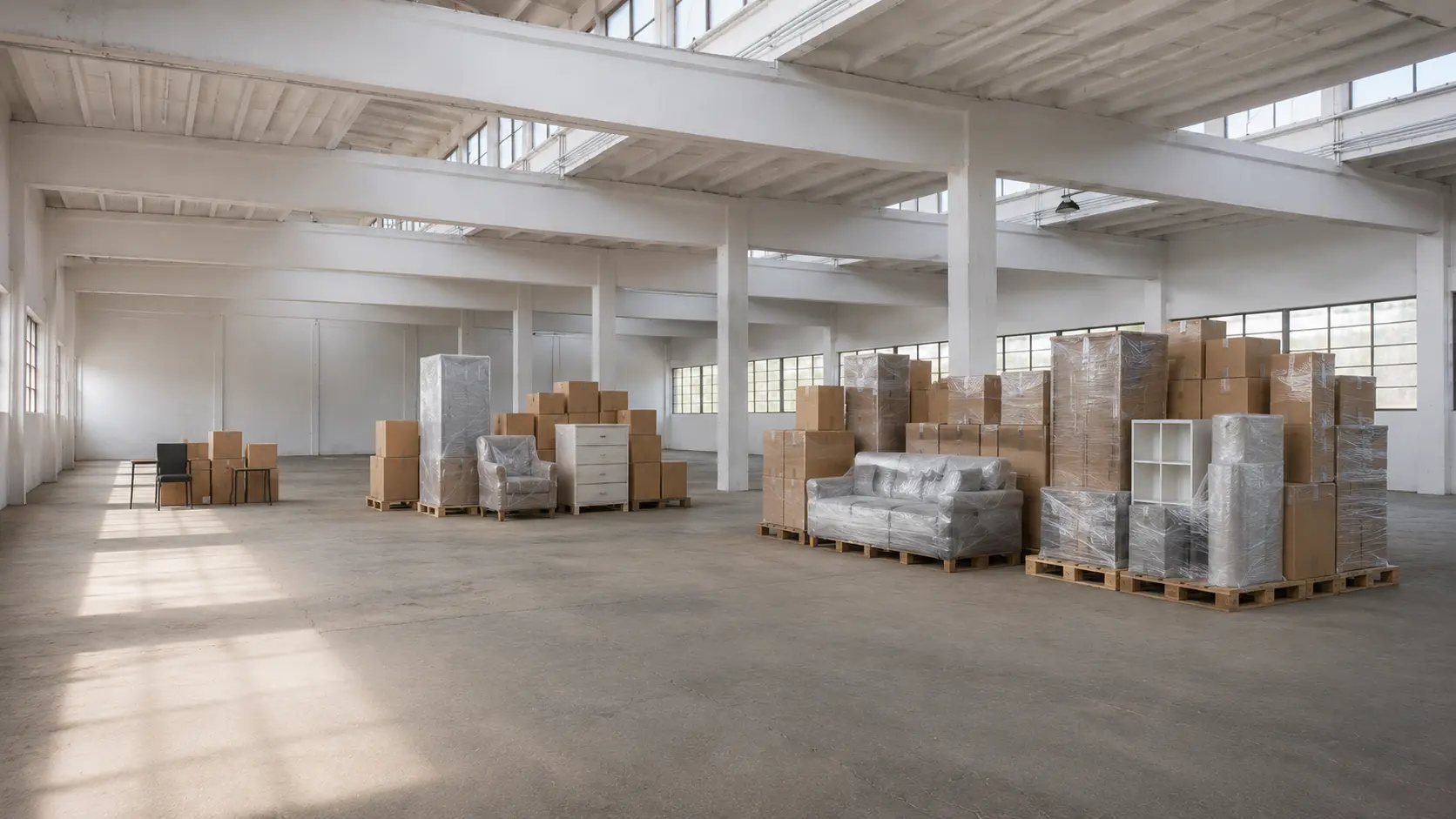
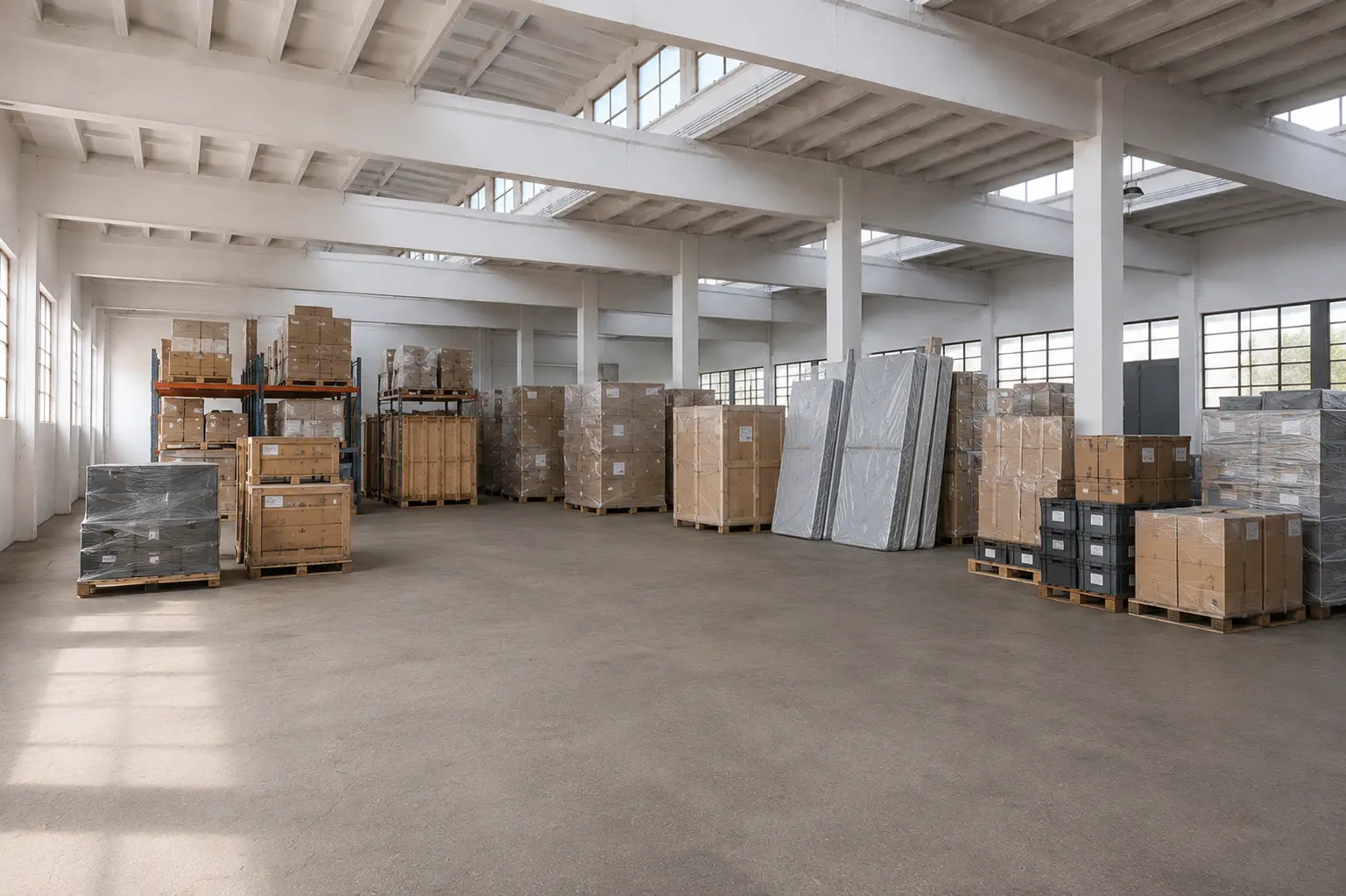
Before the first day of the renovation: With our man-and-van service we arrive with the truck, load up and take the furniture away. At the warehouse an itemised inventory is made, and every item is wrapped in protective film and labelled with your name. We don't charge for floors, and there's no mileage fee within Budapest.
At the end of the renovation: On an agreed date we bring the furniture back, put it in place and reassemble anything we took apart. Finally, we check together that everything is in order.
One important tip: clean before you move back in
Many people make the mistake of having the furniture brought back on the last day of the renovation. But fine dust keeps settling for days, and freshly painted walls and newly laid parquet need time too. It's worth moving back in after a thorough deep clean and a day or two of airing. If the storage is flexible, those few days are no problem.