
Why is it risky to keep costumes in a rehearsal room or a basement?
Rehearsal rooms and the storage areas of theatre buildings are rarely built for long-term textile storage. Basements are often damp, while attics are exposed to temperature swings and dust — both speed up the ageing of fabric and paint.
Persistently high humidity can cause mould, direct light can cause fading, while crowded, unventilated storage favours moths and other pests.
How should you pack costumes before storage?
Only pack costumes that are completely dry — material put away damp will almost certainly start to mould in an enclosed space. An airtight vacuum bag may seem convenient, but it can crease the fabric and deform prop materials, so for sensitive pieces a breathable garment bag or cover is a better choice.
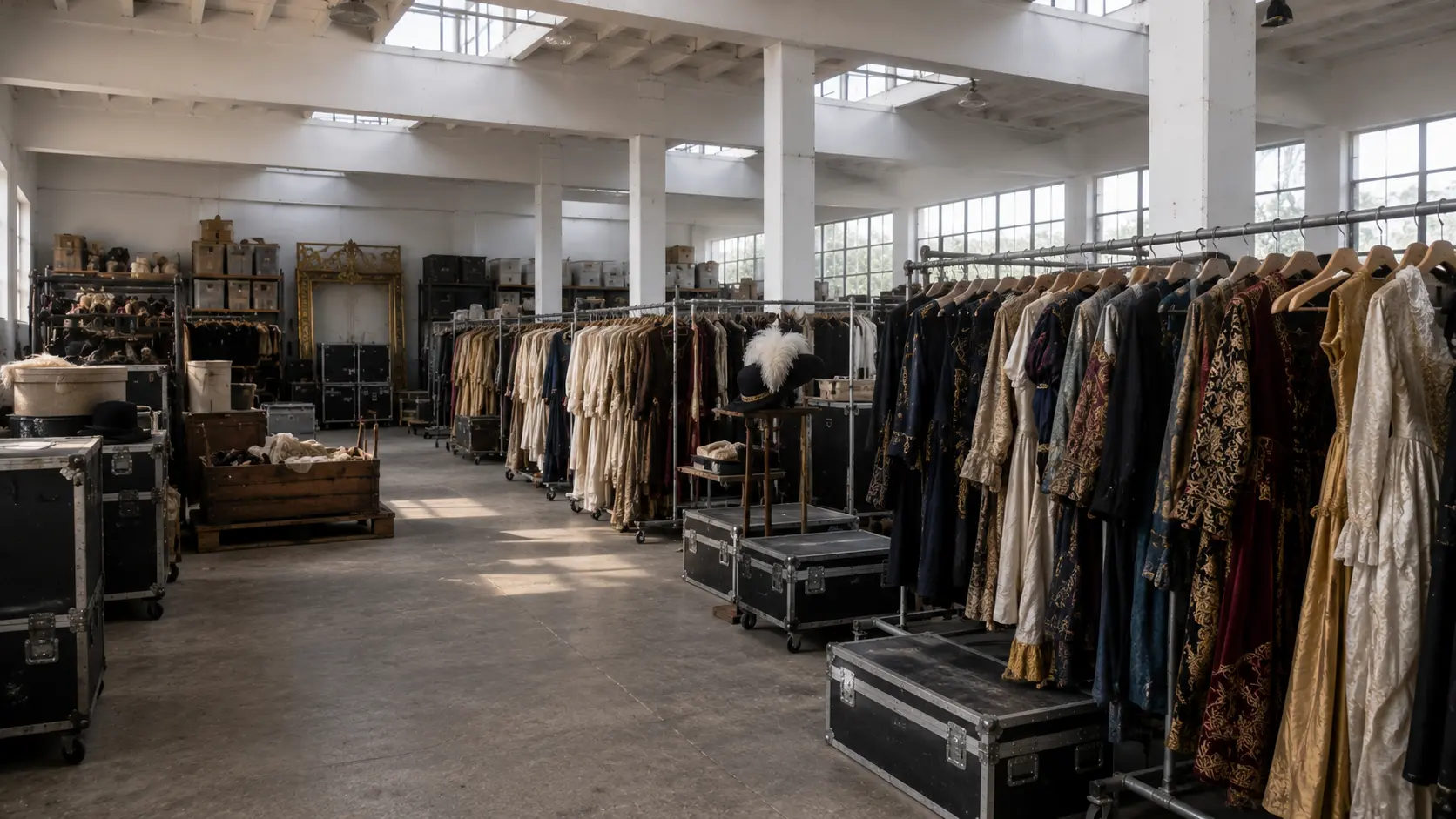
For larger quantities, a mobile wardrobe or a hanging rail system helps keep costumes from creasing and makes them easy to review.
- pack only when completely dry
- a breathable garment bag or cover instead of vacuum wrap
- store on hangers if the size allows
- protect props and decorations separately, padded
What storage conditions really matter?
Costumes need a dry, well-ventilated place, protected from direct sunlight. A stable temperature matters more than a specific figure — large swings speed up material fatigue.
Ask how the warehouse protects against pests, and how enclosed and clean the storage space is. An organised, shelved or hanging arrangement also makes it easier to quickly find the piece you need.
What about props and smaller set pieces?
Box the smaller props and write the contents and the production's name on every box — that way you won't have to unpack everything next season just to find what you're looking for.
Pack fragile or painted-surface items separately, protected with paper or a filler material, so they don't get damaged in transit either.